

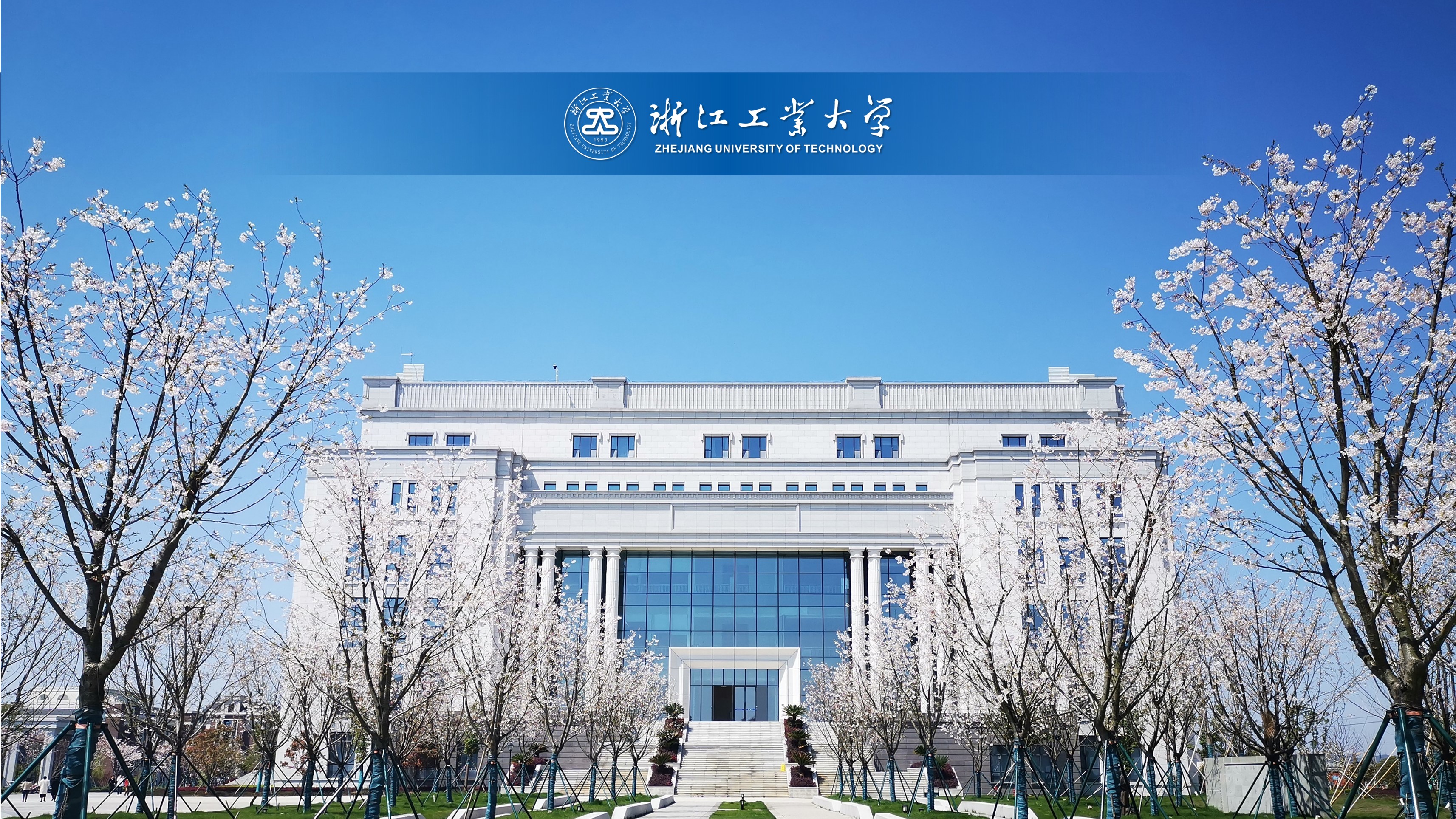
Zhejiang University of Technology (ZJUT) is the first university
jointly established by provincial and ministerial authorities in the
eastern coastal region of China, a leading university in the first
batch of the national “Institutions of Higher Learning Innovation
Ability Enhancement” (2011 Plan) collaborative innovation centers,
and one of the first key and high-level university in Zhejiang
Province. It is located in Hangzhou, a renowned historical and
cultural city as well as a scenic tourist destination in China. ZJUT
was founded in 1953, with its origins dating back to the Zhejiang
Intermediate School of Technology established in 1910. Over the
years, it has developed through several stages, including Hangzhou
Chemical Engineering School, Zhejiang Chemical College, Zhejiang
University of Chemical Engineering College, and Zhejiang Engineering
College, eventually being renamed Zhejiang University of Technology
in 1993.
During General Secretary Xi Jinping’s tenure in Zhejiang, he
directed the University to “actively leverage its disciplinary
advantages and intellectual talents to strive to become a training
base for various types of outstanding talents and a research and
development base for engineering science and technology, thus making
new and greater contributions to accelerating the comprehensive
construction of a well-off society in Zhejiang and achieving
modernization ahead of schedule.”
The University consists of 3 campuses: Zhaohui, Pingfeng, and
Moganshan campus, with a total area of 2,227 acres. It includes 27
colleges and 1 department, in addition to an independent
college—Zhijiang College. Currently, there are 21,880 full-time
undergraduate students, 16,638 students in various graduate
programs, and 1,382 international students. The university employs
3,387 staff members, including 2,412 full-time faculty. It has 83
national-level talents, including 6 academicians from the Chinese
Academy of Sciences (CAS) and the Chinese Academy of Engineering
(CAE), and 129 provincial and ministerial-level talents.